Ice Baths, Heat Therapy, and Sleep Tech: We Sorted the Biohacking Wins From the Wishful Thinking
Somewhere between Andrew Huberman's morning cold shower protocol and your favorite athlete's Instagram story from inside a cryo chamber, biohacking went from niche Silicon Valley experiment to full-blown American wellness obsession. Walk into any upscale gym in the country right now and you'll likely find a cold plunge tub, an infrared sauna, and at least one person wearing a continuous glucose monitor who hasn't been diagnosed with diabetes.
The appeal is real. Who wouldn't want to optimize their recovery, sharpen their focus, and squeeze more performance out of the same 24 hours? The problem is that the biohacking space moves fast, influencer culture moves faster, and the science — when it exists — is often more nuanced than the headlines suggest.
So let's slow down and actually look at what's worth your time, money, and cold, shivering discomfort. Here's our breakdown of the most popular recovery biohacks right now, ranked by the actual evidence behind them.
✅ Cold Water Immersion: Real Benefits, With an Asterisk
The claim: Jumping into cold water (typically 50–59°F) reduces inflammation, accelerates muscle recovery, and builds mental resilience.
What the science says: Cold water immersion (CWI) does have legitimate, well-documented benefits for reducing delayed onset muscle soreness (DOMS) and perceived fatigue after intense exercise. Multiple meta-analyses support its use as an acute recovery tool, particularly after endurance events or high-volume training days.
Here's the asterisk, though: if your primary goal is building muscle, the research gets more complicated. A notable 2015 study published in the Journal of Physiology found that regular post-training cold exposure actually blunted long-term muscle and strength gains by suppressing the inflammatory signaling that drives adaptation. In other words, the same mechanism that reduces soreness may also reduce growth.
The One88 Fit take: Cold plunges are a solid tool for recovery after competition, heavy endurance work, or when you need to bounce back quickly between training sessions. If you're in a dedicated muscle-building phase, save them for off days. And no, a cold shower does deliver some benefit — it just isn't the same as full immersion.
Verdict: ✅ Legit — use it strategically
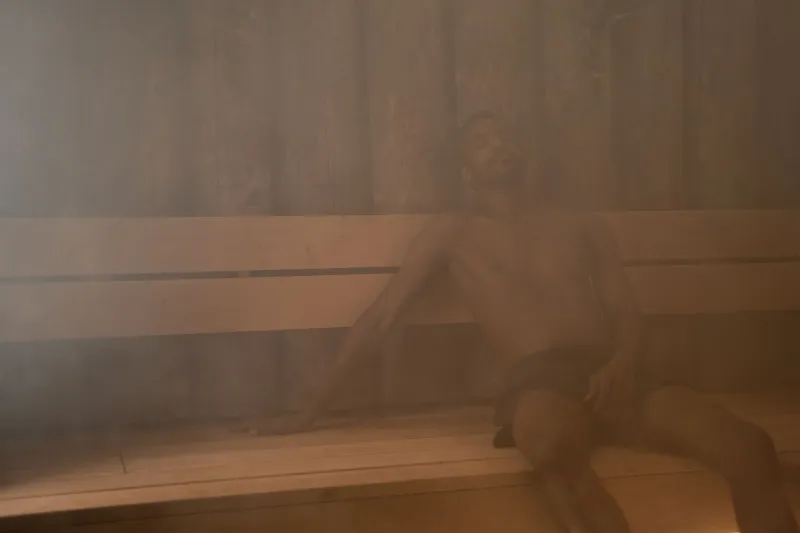
✅ Sauna Therapy: One of the Most Evidence-Backed Biohacks Going
The claim: Regular sauna use improves cardiovascular health, supports muscle recovery, enhances mood, and may extend lifespan.
What the science says: This one has some of the strongest research behind it of anything in the biohacking space. The Finnish cohort studies — including landmark research following thousands of men over decades — found that frequent sauna use (4–7 sessions per week) was associated with significantly reduced risk of cardiovascular disease and all-cause mortality.
On the performance side, heat exposure increases plasma volume, improves thermoregulation, and triggers the release of heat shock proteins that support cellular repair. There's also solid evidence linking regular sauna use to improved growth hormone response and reduced cortisol levels over time.
Contrast therapy — alternating between heat and cold — has gained popularity as a recovery protocol, and early research suggests it may offer additive benefits for reducing muscle soreness and improving circulation compared to either modality alone.
The One88 Fit take: If you have access to a sauna, this is probably the single highest-ROI biohacking habit you can build. Even 2–3 sessions per week at 15–20 minutes per session appears to deliver meaningful benefits. You don't need a $5,000 home unit — most gyms and wellness centers offer access.
Verdict: ✅ Strongly supported — make it a regular habit
⚠️ Sleep Optimization Tech: Useful Tool, Easy to Misuse
The claim: Wearables like the Oura Ring, WHOOP strap, and Garmin sleep trackers give you precise insight into your sleep quality, helping you optimize recovery at a granular level.
What the science says: The devices themselves have improved dramatically and can provide genuinely useful trend data — particularly around resting heart rate, heart rate variability (HRV), and broad sleep duration. HRV in particular is a well-validated marker of autonomic nervous system recovery, and tracking it over time can help you identify when you're under-recovered before your body sends louder signals.
The catch? Sleep stage accuracy (REM vs. deep sleep vs. light sleep) in consumer wearables still lags significantly behind clinical polysomnography. A 2022 study found that most consumer devices misclassify sleep stages at meaningful rates. This matters because people often make behavioral decisions — sleeping in, skipping workouts, changing their diet — based on data that may not be entirely accurate.
There's also an emerging phenomenon called orthosomnia: anxiety about sleep metrics that actually makes sleep worse. If checking your sleep score first thing in the morning is stressing you out, the tool is working against you.
The One88 Fit take: Sleep tech is worth using if it helps you build consistent habits and spot recovery trends over weeks and months. Use it as a compass, not a GPS. And if it's making you more anxious, put it in a drawer for a month.
Verdict: ⚠️ Useful with realistic expectations — don't let the data run your life
❌ Cryotherapy Chambers: The Expensive Cousin of the Cold Plunge
The claim: Three minutes in a cryotherapy chamber (temperatures as low as -200°F using liquid nitrogen) delivers superior recovery benefits compared to ice baths.
What the science says: Despite the dramatic marketing and celebrity endorsements, the evidence for whole-body cryotherapy (WBC) over traditional cold water immersion is thin. Several head-to-head comparisons have found that cold water immersion is equally or more effective at reducing muscle soreness — and it costs a fraction of the price. A session at a cryo studio typically runs $40–$100.
The core issue is skin temperature versus core temperature. Ice baths lower core body temperature meaningfully; cryotherapy chambers primarily affect skin temperature. The physiological mechanisms driving recovery benefits appear more closely tied to actual core cooling.
The One88 Fit take: Unless you genuinely hate the sensation of cold water and need a more tolerable alternative, you're largely paying for the experience and the novelty. Save the money.
Verdict: ❌ Overhyped — ice bath does the job better for less
⚠️ Red Light Therapy: Promising, But Still Emerging
The claim: Low-level red and near-infrared light exposure reduces inflammation, accelerates tissue repair, and improves sleep quality.
What the science says: Red light therapy (photobiomodulation) is genuinely interesting, and there's a growing body of research suggesting real effects on cellular energy production via mitochondrial stimulation. Some studies show benefits for wound healing, joint pain, and skin health. Sleep-related benefits from evening red light exposure are plausible given its effects on melatonin production.
That said, the research is still relatively early, study sizes tend to be small, and optimal dosing protocols aren't well established. The consumer device market has exploded faster than the evidence base.
The One88 Fit take: Worth keeping an eye on as the science matures. If you're already nailing the fundamentals — sleep, training, nutrition, stress management — and want to experiment, it's low-risk. Just don't prioritize it over the basics.
Verdict: ⚠️ Interesting but not essential yet
The Bottom Line on Biohacking
Here's the thing about all of this: the best recovery tool available to most people isn't a cold plunge tub or a $300 sleep ring. It's consistent, quality sleep. It's managing stress. It's eating enough protein and not chronically under-fueling. It's taking your rest days seriously.
Biohacking tools — the ones with real evidence behind them — are multipliers. They work best when they're layered on top of solid fundamentals, not used as substitutes for them. At One88 Fit, our recovery and performance guidance is built around that exact hierarchy: nail the basics first, then explore the upgrades.
Ice baths and saunas are genuinely useful. Sleep tech can be a helpful compass. But no gadget or cold tub is going to outperform eight hours of sleep and a well-designed training program. Start there.