Stop Doing More and Start Doing What Matters: The 80/20 Approach to Real Fitness Results
Let's be honest — at some point, most of us have fallen into the trap of thinking that more is always better. More sets, more supplements, more cardio, more meal prep containers lined up on the counter. If you're exhausted just reading that sentence, you're not alone.
Here's the thing: the fitness industry has a vested interest in making you believe that results require complexity. But the truth? The science — and a whole lot of real-world experience — points in the opposite direction.
Enter the 80/20 rule, or as economists call it, the Pareto Principle. It's the idea that roughly 80% of your outcomes come from just 20% of your inputs. You've probably heard it applied to business or productivity. But it maps onto fitness with almost eerie accuracy — and once you see it, you can't unsee it.
What the 80/20 Rule Actually Means for Your Training
Think about your last month of workouts. How many of those sessions genuinely moved the needle on your strength, endurance, or body composition? If you're training five or six days a week and feeling like you're grinding without much to show for it, there's a good chance you're filling most of your time with low-impact activity while the truly productive stuff gets squeezed into the margins.
The 80/20 framework isn't about being lazy. It's about being strategic. For most people — especially busy professionals juggling work, family, and everything else life throws at you — identifying the handful of habits and movements that generate the biggest return is the difference between plateauing for years and actually making progress.
At One88 Fit, this idea sits at the core of how we think about personalized training. Smarter effort, not just more of it.
The 20% of Exercises That Deliver 80% of Your Gains
If you stripped your program down to only the movements that truly build functional strength and drive meaningful body composition changes, what would make the cut?
Spoiler: it's not the cable kickbacks or the bosu ball single-leg curl.
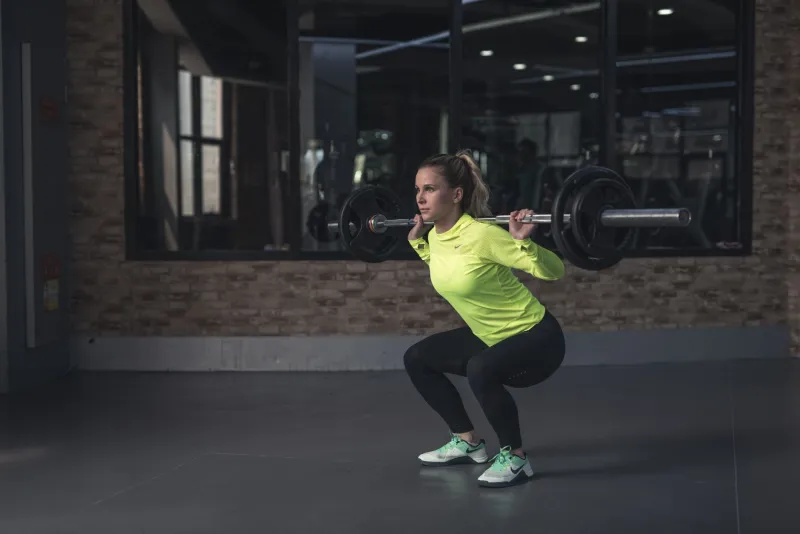
The compound movements — squats, deadlifts, hip hinges, horizontal and vertical pressing, rows, and loaded carries — consistently outperform isolation exercises when it comes to muscle recruitment, hormonal response, and caloric expenditure. These aren't flashy. They're not going to go viral on TikTok. But they've been the backbone of effective training programs for decades for a reason.
For cardiovascular fitness, high-intensity interval training (HIIT) and zone 2 steady-state cardio together cover the lion's share of aerobic adaptation. You don't need seven different cardio modalities. You need to do the right ones consistently.
The practical takeaway: Build your program around 4–6 foundational compound movements, train them with progressive overload, and stop chasing novelty. That's your 20%.
Nutrition: The Handful of Habits That Actually Change Your Body
Nutrition is where the 80/20 rule gets brutally clarifying. There are approximately 10,000 diets, protocols, and eating philosophies competing for your attention at any given moment. Carnivore. Keto. Intuitive eating. Intermittent fasting. Time-restricted windows. The list never ends.
But strip it all down, and the research keeps pointing to the same foundational habits:
- Eating enough protein. Somewhere in the range of 0.7 to 1 gram per pound of bodyweight supports muscle maintenance and satiety better than almost anything else.
- Prioritizing whole foods the majority of the time. Not obsessively. Just most of the time.
- Managing overall calorie intake in a way that aligns with your goal — whether that's a modest deficit for fat loss or a slight surplus for muscle building.
- Staying consistently hydrated. It sounds almost too simple, but chronic mild dehydration tanks performance and recovery in ways most people don't even notice.
That's it. Those four habits, done consistently, will outperform 90% of the trendy protocols you'll encounter online. Everything else is refinement — and refinement is only worth pursuing once the basics are locked in.
Recovery: The Most Underrated 20%
If there's one area where people consistently under-invest relative to the return, it's recovery. Sleep is the big one. Research is unambiguous: chronic sleep deprivation impairs muscle protein synthesis, elevates cortisol, increases appetite for calorie-dense foods, and tanks workout performance. Getting 7–9 hours of quality sleep isn't a luxury. It's the highest-leverage recovery tool available to you — and it's free.
Beyond sleep, managing stress levels and incorporating deliberate rest days round out the recovery picture. Your body doesn't adapt during training. It adapts during recovery. Skipping this step is like planting seeds and then never watering them.
Why We Love Complexity (And Why It's Holding You Back)
Here's a psychological wrinkle worth naming: complexity feels productive. Researching the optimal pre-workout timing window or debating the merits of blood flow restriction training gives your brain the sensation of progress without requiring the uncomfortable consistency of just showing up and doing the basics well.
Fitness content, by design, keeps feeding you new things to think about. That's how the industry stays relevant. But consuming information is not the same as making progress.
The most successful people in their fitness journeys — the ones who show up 10 years from now looking and feeling great — are almost never the ones who had the most complicated programs. They're the ones who identified what worked, stuck with it long enough to see compounding results, and resisted the urge to constantly start over with something new.
Building Your 20% Plan
So what does a simplified, high-leverage fitness approach actually look like in practice?
- 3–4 training sessions per week built around compound movements with progressive overload
- A nutrition framework centered on protein, whole foods, and calorie awareness — without obsessive tracking
- 7–9 hours of sleep treated as a non-negotiable training variable
- One or two cardio sessions per week that you actually enjoy and will stick with
- A recovery day that genuinely involves rest
Notice what's not on that list: a dozen supplements, daily two-a-day sessions, an elaborate periodization scheme, or a 47-step morning routine.
Keep it simple. Keep it consistent. That's your 20% — and it's more than enough.
At One88 Fit, every personalized training plan we build is designed with this principle in mind. We're not here to overwhelm you with volume. We're here to help you find the levers that actually move things, and pull them hard. That's what training smarter looks like.