Your Training Age Is the Real Clock — Not Your Birthday
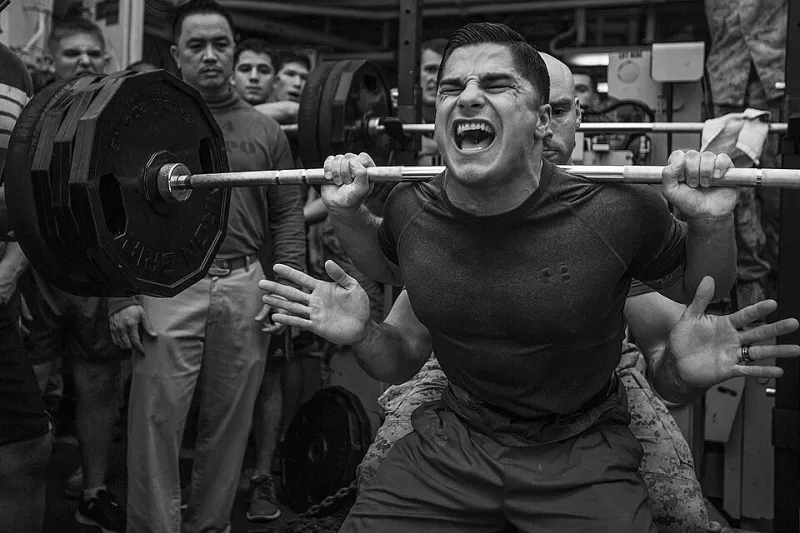
Photo: U.S. Marine Corps photo by Sgt. Austin Hazard, Public domain, via Wikimedia Commons
Somewhere around 30, a lot of people start quietly blaming their body for things that are actually their program's fault. The weights stop moving up. Recovery feels harder. That easy momentum from the early days of lifting? Gone. And the default explanation is age — like the birthday itself flipped a switch.
Here's the thing: that explanation is mostly wrong. Or at least, it's incomplete in a way that's costing you real results.
The number that actually matters when it comes to strength progression isn't how old you are. It's how long you've been training — and more specifically, how well you've been training. That's what coaches call training age, and once you understand it, a lot of those plateau frustrations start to make a lot more sense.
What Training Age Actually Means
Training age is a measure of how long your body has been exposed to consistent, progressive resistance training. A 35-year-old who picked up a barbell 18 months ago has a low training age. A 27-year-old who's been lifting since high school but hasn't changed their routine in four years? Higher training age — and probably closer to their genetic ceiling than they realize.
This distinction matters because your nervous system and musculature don't care about the calendar year. They respond to stimulus. Early in your training life, almost anything works. Your body is adapting to movement patterns, building neuromuscular coordination, and packing on strength seemingly effortlessly. Coaches call this the "newbie gains" phase, and it's real — but it has an expiration date.
As training age increases, those easy adaptations slow down. Your body gets more efficient, which sounds like a good thing, but efficiency in this context means it takes more precise, well-structured stress to trigger the same response. That's not age-related decline. That's just how biological adaptation works.
Why 30 Feels Like a Wall (Even When It Isn't)
The early 30s plateau is real, but the cause is often misdiagnosed. For a lot of people, their late 20s were years of casual, inconsistent training — gym sessions squeezed between busy schedules, no real periodization, programs hopped from one influencer to the next. The body adapted to all of it, but not deeply.
Then life stabilizes a little. Work schedules settle, routines solidify, and suddenly people are training more consistently than ever. But the gains aren't coming. And because this coincides with turning 30, the birthday gets the blame.
What's actually happening is a training age reckoning. The low-hanging fruit is gone. Your body has absorbed the general stimulus of "doing gym stuff" and now needs something more specific to keep adapting.
Meanwhile, that hypothetical 35-year-old picking up a barbell for the first time? They're swimming in low-hanging fruit. Their nervous system is making massive leaps in motor unit recruitment, their tendons are adapting, their coordination is improving weekly. They'll likely outpace a stagnant 28-year-old for months, possibly longer — not because they're younger or have better genetics, but because their training age is lower and the adaptation window is wide open.
The Nervous System Is the Bottleneck
Strength isn't just about muscle size. A huge portion of how much weight you can move is determined by your nervous system's ability to recruit muscle fibers quickly and efficiently. Early in your training life, you get dramatic neurological improvements — your brain gets better at firing the right muscles in the right sequence. This is why beginners can double their squat without gaining much visible muscle.
As training age increases, those neurological gains plateau too. Breaking through requires training that specifically targets this system: heavier loads, longer rest periods, and more intentional focus on movement quality. High-rep burnout circuits that worked at training age one or two become increasingly ineffective as your nervous system demands more precise input.
This is where a lot of people go wrong. They double down on volume — more sets, more reps, more days — when what they actually need is more intensity and more recovery. The nervous system doesn't recover the same way muscle tissue does, and it takes longer to adapt. Cramming in extra sessions can actually set you back.
What to Do Differently Based on Where You Actually Are
The first step is an honest audit. How many years have you been training with real structure and progressive overload? Not just going to the gym — actually following a program with tracked loads and intentional progression. That number is your working training age.
Low training age (0–2 years of structured training): Almost any progressive program will work. Focus on mastering the foundational compound movements — squat, hinge, press, pull — and don't overthink it. Consistency and gradual load increases are your primary tools.
Intermediate training age (2–5 years): You need periodization. Linear progression is mostly behind you. Look for programs that wave intensity over weeks and months, include planned variation, and specifically address weaknesses in your movement patterns. This is where personalized programming starts to really pay off.
Advanced training age (5+ years of serious training): Your margins are smaller and your recovery demands are higher. Progress might be measured in months rather than weeks. Specificity is everything — targeted accessory work, precise load management, and serious attention to sleep and nutrition are no longer optional.
Genetics Are Real — But They're Not the Ceiling You Think They Are
Yes, genetics influence your muscle fiber composition, hormone levels, and structural leverages. Some people are built to squat heavy; others are built to run marathons. That's real.
But for the vast majority of people hitting a plateau in their 30s, genetics are nowhere near the limiting factor. Training age, program design, sleep quality, and nutrition are doing far more work. The genetic ceiling is usually much higher than people reach before they blame their DNA and scale back their ambitions.
Before you write off your progress potential as a function of your birthday or your parents, take a hard look at your training age and whether your program is actually appropriate for it. Chances are, the fix is more specific — not more resigned.
At One88 Fit, we build training plans around where you actually are, not where you think you should be based on your age. Because the smarter approach isn't working harder against your biology — it's working with your actual adaptation potential, wherever that sits right now.