The Hidden Bottleneck Killing Your Lifts (And It's Not What You Think)
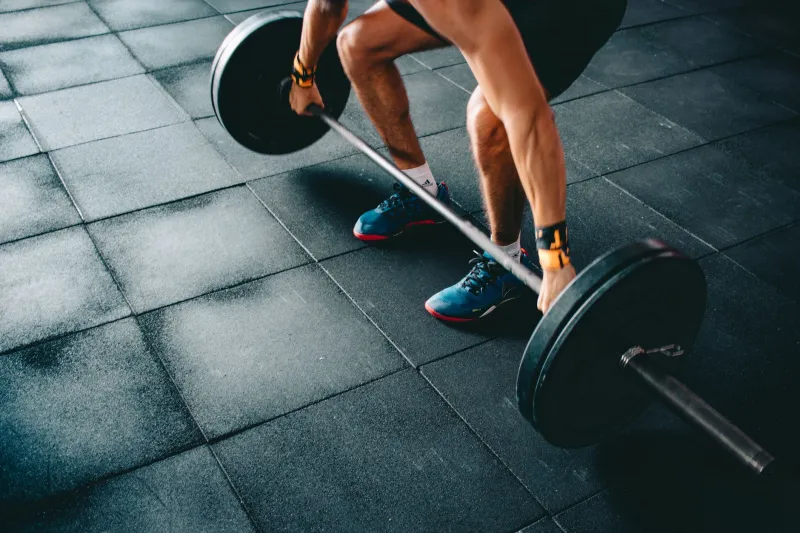
You've been stuck at the same deadlift weight for six weeks. Your rows feel sloppy. Your pull-ups plateau out way before your back does. You've tried everything — more volume, better sleep, dialing in your protein. But here's the thing nobody tells you: the weak link might not be your lats, your hamstrings, or your recovery. It might be your grip.
Grip strength is one of those fitness variables that lives in the background, quietly capping your performance across almost every compound movement you do — until one day it can't hold on anymore and everything stalls. Most lifters don't even notice it's happening. And that's exactly the problem.
Why Grip Strength Is a Bigger Deal Than You're Treating It
Here's a stat that tends to stop people cold: research published in the Journal of Strength and Conditioning Research found that grip strength is one of the strongest predictors of overall muscular strength and functional capacity. Not just for older adults — for everyone. The stronger your grip, the more force your nervous system is willing to produce throughout your entire body.
That's not a coincidence. It's neurology.
When your hands wrap around a barbell, dumbbell, or pull-up bar, your nervous system runs a quick threat assessment. It's essentially asking: Can this grip support the load we're about to move? If the answer is uncertain, your CNS dials back motor unit recruitment — meaning your muscles don't fire as hard as they could. Your body is protecting itself, but the side effect is that you're leaving real strength on the table.
This is sometimes called irradiation — the concept, popularized by strength coach Pavel Tsatsouline, that squeezing harder with your hands creates a cascading tension response through your arms, shoulders, and core. More grip tension = more total body tension = more force production. Flip that around and a weak grip means the whole chain is compromised before you even start your first rep.
The Movements Most Affected (And Why You're Probably Missing the Signs)
Grip fatigue doesn't always announce itself loudly. You're not going to drop a barbell mid-set and think, "Ah yes, grip strength — that's my issue." Instead, it shows up subtly:
- Deadlifts: Your lower back or hamstrings feel like they could go further, but your hands give out first.
- Barbell rows: You start compensating with momentum because you can't hold the bar securely enough to control the pull.
- Pull-ups and chin-ups: You gas out at rep 6 even though your lats feel fine.
- Farmer carries: You drop the weight early and blame your conditioning.
- Bench press: Yes, even here — a loose grip reduces lat activation and shoulder stability, making the press less efficient.
If any of those scenarios sound familiar, your grip might be writing checks your training program can't cash.
How to Know If Grip Is Actually Your Bottleneck
Before you overhaul your program, run this quick diagnostic:
The Strap Test: On your next heavy deadlift or row session, use lifting straps to eliminate grip as a variable. If your reps, your form, or your feel improves noticeably with straps, grip is absolutely a limiting factor. If nothing changes, the issue is elsewhere.
The Farmer Carry Duration Test: Grab a pair of dumbbells at roughly 50% of your bodyweight (total, not each) and walk until you have to drop them. Under 45 seconds? Your grip needs work. Over 90 seconds? You're probably in decent shape.
The Hang Test: Dead hang from a pull-up bar. If you can't hold on for at least 30–45 seconds with a clean, controlled hang, grip is likely limiting your pulling movements.
These aren't lab-grade assessments, but they'll give you a solid read on where you stand.
A Practical Grip Progression That Won't Wreck Your Main Program
The good news: fixing your grip doesn't require a separate training block or a bunch of weird gadgets. You can build it into what you're already doing — just strategically.
Phase 1 — Remove the Crutches (Weeks 1–3)
If you've been relying on straps for everything, pull back. Use them only for your heaviest sets where form would genuinely break down. Let your grip work harder on warm-up sets and accessory work. This alone creates a training stimulus most lifters have been skipping.
Phase 2 — Add Targeted Grip Work (Weeks 2–6)
Tag 10–15 minutes of grip-specific work onto the end of two or three sessions per week. Keep it simple:
- Dead hangs: 3 sets, max duration. Rest 60 seconds between sets.
- Farmer carries: 3 rounds of 40–60 feet with challenging weight. Focus on keeping your fingers fully engaged, not just your palm.
- Towel pull-ups or rope rows: These force your grip to work in a less stable position, building functional hand strength fast.
- Plate pinches: Pinch a 25 or 45 lb plate between your thumb and fingers, hold for time. Deceptively brutal.
Phase 3 — Thick Bar or Fat Grip Training (Weeks 4–8)
Fat Gripz or thick-handled implements are legitimately useful here. Wrapping a fat grip adapter around your barbell or dumbbell forces your hand to work harder to maintain control, which drives grip adaptation faster than standard handles. Even one or two exercises per session with fat grips can accelerate your progress significantly.
The Long Game: What Happens When Your Grip Catches Up
Most lifters who address their grip report a noticeable performance bump across the board within four to six weeks. Deadlifts feel more locked in. Rows get cleaner. Pull-up volume goes up. And because your nervous system is now more confident in your grip, it stops holding back your motor unit recruitment — which means you actually get stronger everywhere, not just in your hands.
There's also a longevity angle worth mentioning. Grip strength is one of the most reliable biomarkers for long-term health outcomes. Studies have linked stronger grip to lower all-cause mortality, better cardiovascular health, and reduced injury risk. That's not a small thing. Training your grip isn't just about moving more weight today — it's an investment in how your body performs for decades.
Stop Ignoring the Thing in Plain Sight
At One88 Fit, we talk a lot about training smarter rather than just harder. Grip strength is a perfect example of that principle in action. It's hiding in every workout you do, quietly setting the ceiling on what you can achieve — and most people walk right past it without a second thought.
Run the diagnostic. Do the test. If grip is your bottleneck, commit to fixing it. It's one of the highest-leverage changes you can make to your training, and it costs you almost nothing in terms of extra time or recovery.
Sometimes the thing that unlocks everything is the thing you've been overlooking the longest.